

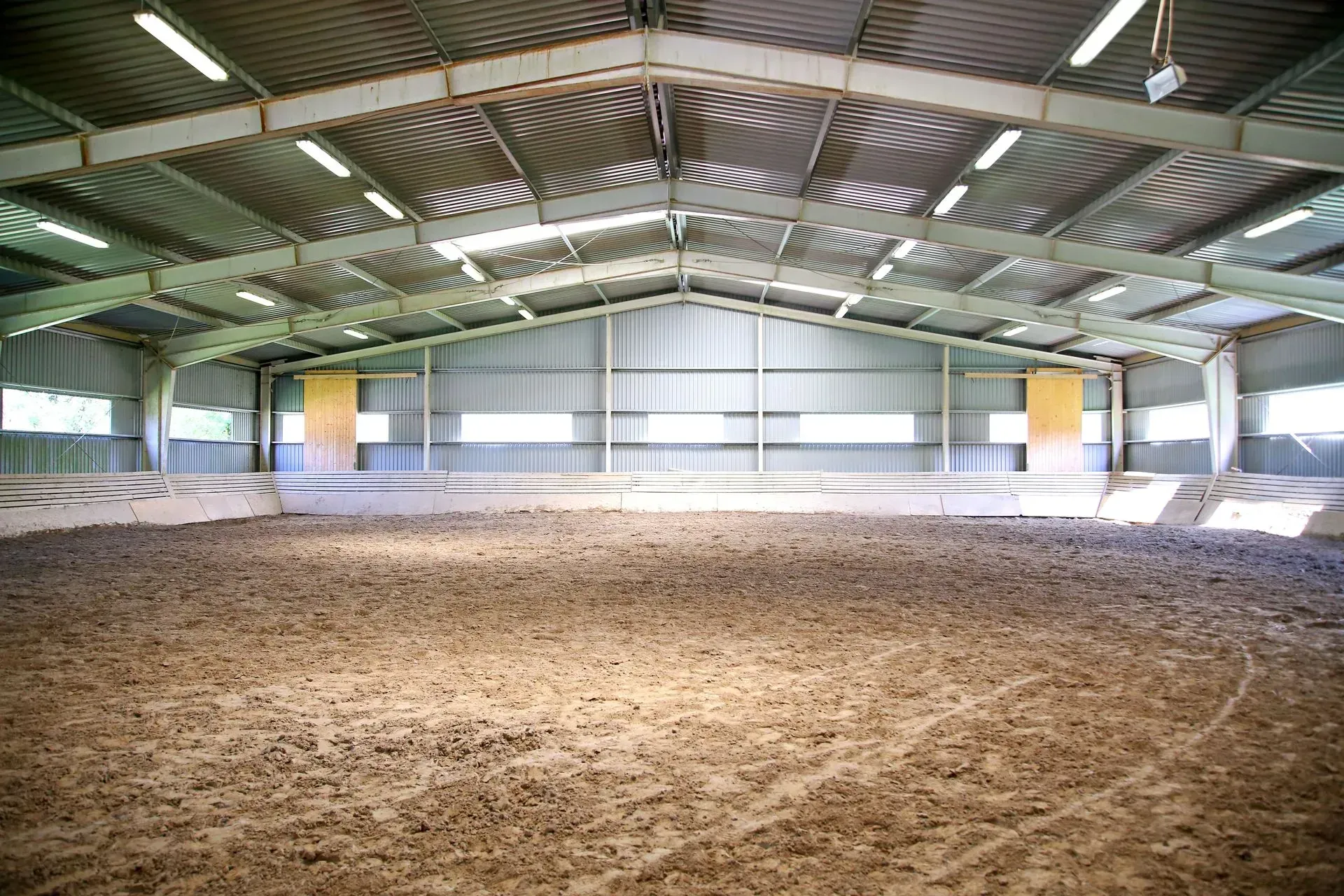
Barns and Arenas Built for Horse Care
Equestrian Buildings in Taneytown for horse owners who need durable facilities that support daily care and boarding operations
Rasche Brothers Inc builds equestrian facilities in Taneytown, Ellicott City, Eldersburg, and surrounding areas that support horse care, boarding operations, and equestrian property needs with structures that include horse barns, riding arenas, run-in sheds, and equipment storage areas. You work with a construction team that uses Lester Buildings systems, which provide strong post-frame construction well suited for agricultural environments and daily use by horse owners and stable operators. These buildings can be customized with stall layouts, ventilation systems, wide aisles, and tack storage areas, and the clear-span design options allow indoor riding arenas and open barn layouts without interior columns blocking sightlines or limiting movement.
The buildings you receive are designed for durability in equestrian environments, where horses move through aisles, trailers back up to loading areas, and ventilation systems must keep air fresh without creating drafts that stress animals. The post-frame design creates open interiors that accommodate multiple stalls, wash racks, grooming areas, and feed storage, and the structural components are engineered to handle the weight of hay stored in lofts and the lateral forces from horses moving inside stalls. Whether you run a boarding operation, manage a training facility, or keep horses on your own property, the building is designed around the daily routines and safety requirements that equestrian facilities demand.
Reach out to Rasche Brothers Inc to discuss barn layout, stall count, and facility needs so the construction team can design a structure that supports your equestrian property.
Stall Layouts and Ventilation Systems
You start by describing how many horses you keep, how you manage feeding and turnout, and what additional functions the building must serve, then work through stall dimensions, aisle width, door placement, and ventilation options with the construction team. The post-frame construction method uses vertical posts set into the ground, supporting horizontal girts and roof trusses that create a rigid structure without the need for continuous foundation walls. This approach allows wide aisles and open barn layouts that make it easier to move horses, equipment, and hay without tight corners or cramped spaces.
After the building is complete, you will notice a structure that stands level and secure, with stalls that remain dry and well-ventilated, and doors that open smoothly without sticking or binding. The roof trusses span the full width without sagging, and the ventilation system keeps air moving without creating drafts that chill horses or blow dust into their eyes. Rasche Brothers Inc uses Lester Buildings systems because the components are manufactured to consistent standards, and the connections between posts, beams, and panels are designed to handle the forces that equestrian buildings face over many years of use.
The building package includes all primary structural members, roofing, siding, and overhead doors, but interior stall partitions, waterers, feeders, and rubber mats must be arranged separately. Electrical wiring, lighting, and plumbing for wash racks are also not included in the base package, though the structure is built to accommodate those additions once the shell is enclosed. The construction timeline depends on building size and site conditions, but most equestrian buildings are completed within a few weeks once materials arrive on site.
What Horse Owners Ask About Equestrian Buildings
Horse owners in Taneytown and neighboring communities often have questions about how barn design affects horse health and what choices improve daily operations.
What stall dimensions work best for different horse breeds?
Standard box stalls measure twelve feet by twelve feet, which works for most horses, but larger breeds or broodmares may need fourteen-foot stalls, and you also need wider aisles if you plan to move horses while others are tied for grooming.
How does ventilation affect horse health in a barn?
Good ventilation removes moisture, ammonia, and dust from the air, which reduces respiratory problems and keeps horses more comfortable, and you achieve this with ridge vents, eave openings, and cupolas that create airflow without drafts blowing directly on stalls.
Why do clear-span designs matter in riding arenas?
Clear-span interiors have no posts or columns blocking the riding area, which gives you an open space for lunging, jumping, or training without obstacles that limit movement or create safety hazards.
What door configurations work best for horse barns?
Sliding doors on exterior walls allow easy access for moving horses in and out, while Dutch doors on stalls let horses look outside without leaving their stalls, and wide center aisles with doors on both ends improve ventilation and provide emergency exits.
When should equestrian property owners in Taneytown plan a barn project?
You should begin planning during late winter or early spring so that construction happens during drier weather, which improves site access and keeps the project on schedule without muddy conditions delaying work.
Rasche Brothers Inc works with equestrian property owners throughout the design and construction process to match building features to your horse care routines and facility needs. Contact the team to discuss your project and get a clear understanding of what an equestrian building can do for your Taneytown property.